











Medical Grade Cameras
What is a Medical Grade Camera and How AVer Stands Out
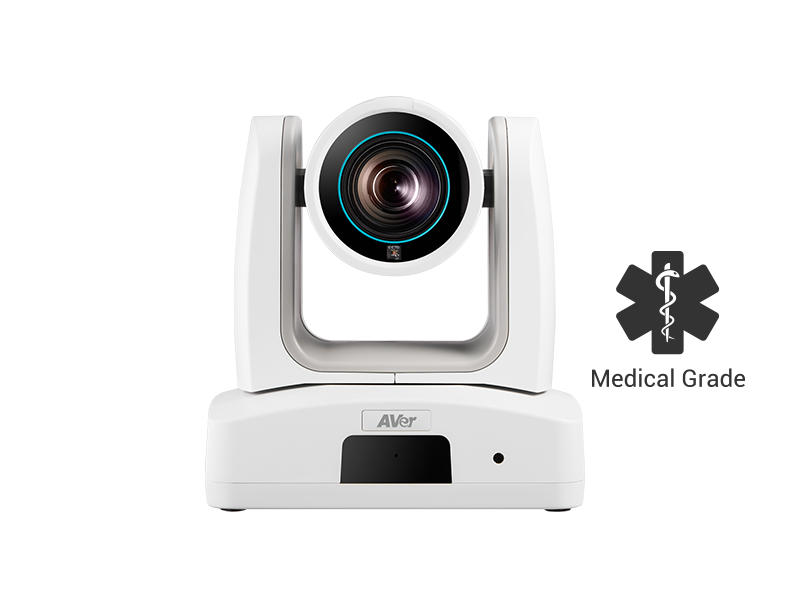
Medical-grade PTZ cameras deliver high-quality video for telemedicine, tele-ICU, and remote patient monitoring, as well as live surgery broadcasting and procedure recording in teaching hospitals. Designed for healthcare environments, these cameras provide precise control, clear visuals, and reliable performance, supporting both clinical care and educational applications.
Find the ideal medical camera for your collaboration needs with the Camera Selection Tool below!
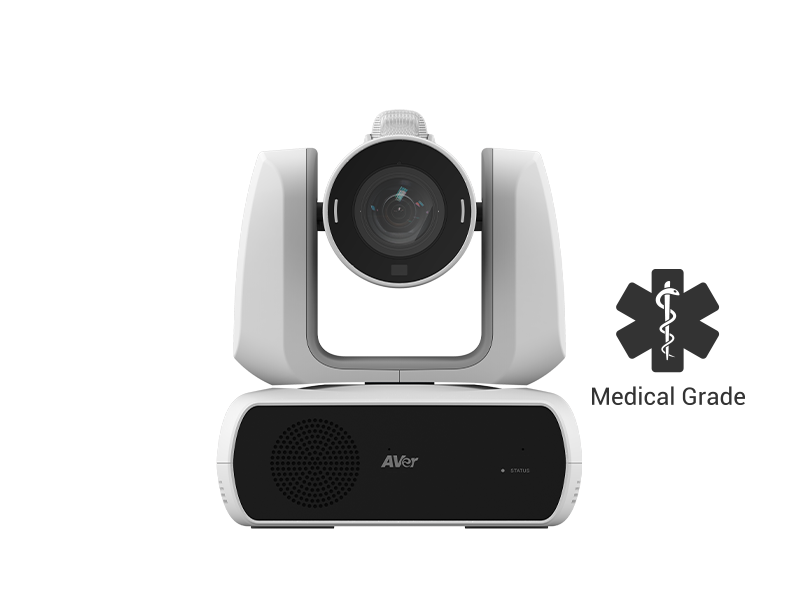
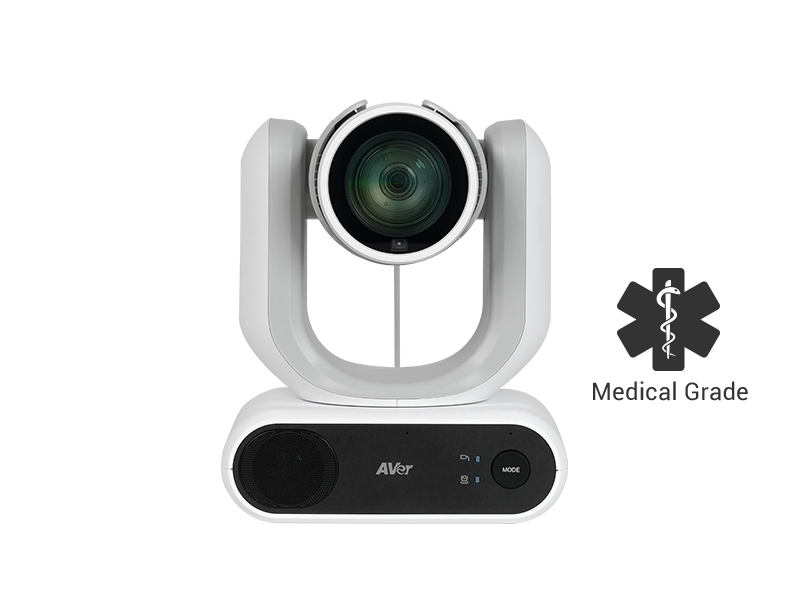
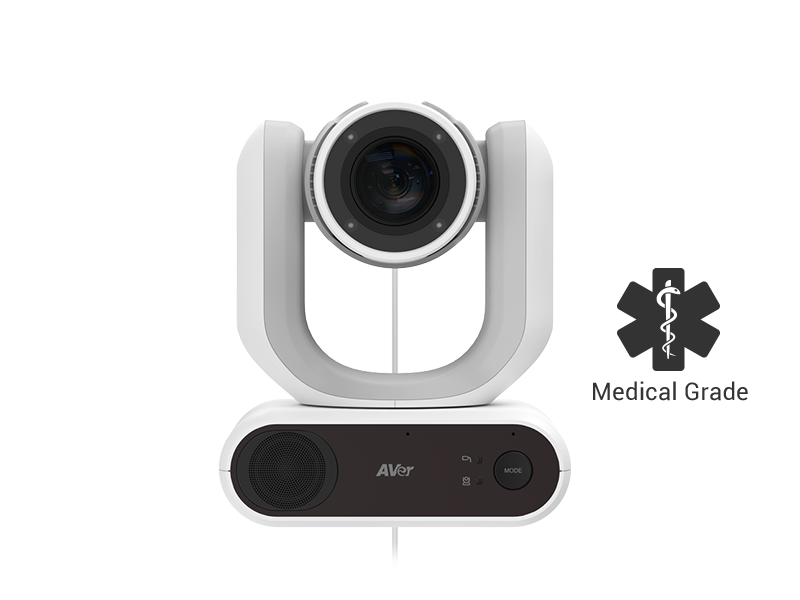
Frequently Asked Questions for Medical Cameras
1. How does a Medical PTZ camera differ from a standard medical camera?
While standard medical cameras are often static or handheld (like endoscopes), a Medical PTZ can be remotely panned, tilted, and zoomed to provide dynamic overviews of an operating room or patient without intruding on the sterile field.
2. What certifications are required for a medical camera?
They must meet stringent healthcare safety and electromagnetic compatibility standards, most notably IEC 60601-1 (or EN 60601-1), to be safely used near patients and sensitive life-saving equipment.
3. Can observing doctors control the camera remotely during surgery?
Yes, remote specialists can control the camera's movements and optical zoom capabilities via network software or a joystick controller, allowing them to collaborate, consult, or teach from a distance.
4. How are these medical cameras typically mounted in a clinical setting?
To keep them out of the way while providing an unobstructed view, they are most commonly mounted on ceiling pendants, surgical boom arms, or integrated into mobile telemedicine carts.
5. Do medical cameras support 4K resolution?
Yes, most professional medical cameras feature 4K UHD sensors. This high resolution is critical for delivering the extreme detail and precise tissue color accuracy needed for remote diagnostics and surgical observation.