

5 Questions to Ask Before Purchasing a Medical-Grade PTZ Camera
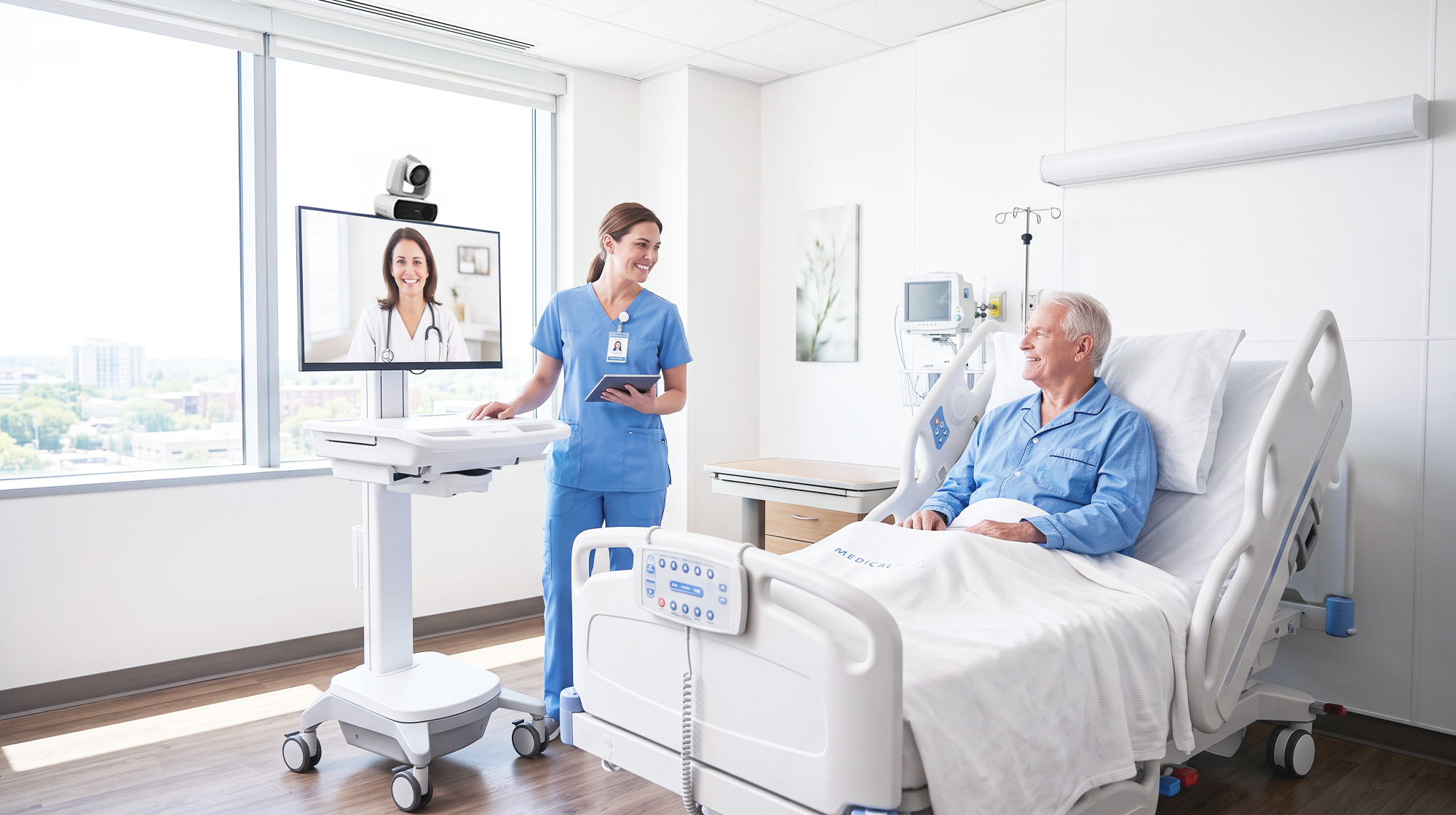
Purchasing a medical camera for a healthcare setting is not the same as buying a PTZ camera for a boardroom or a livestreaming studio. Whether you're outfitting a telehealth cart or a fixed patient room installation, the stakes are higher, the compliance requirements are more demanding, and the consequences of a poor choice can affect patient care and clinical operations. Before you sign a purchase order, make sure you've asked — and answered — these five critical questions.
Question 1: Does This Camera Meet Medical-Grade IEC Compliance Standards?
Medical-grade equipment is subject to strict electromagnetic compatibility requirements that commercial cameras are simply not designed to meet. The governing standard is IEC 60601-1-2, the collateral standard for electromagnetic disturbances (EMC) under the broader IEC 60601-1 family. It defines the emission and immunity requirements that medical electrical equipment must satisfy to operate safely alongside other devices in a clinical environment — and it's the standard most directly relevant to a camera being introduced into a space with life-critical equipment like cardiac monitors or infusion pumps.
Question 2: How Will This Camera Integrate with Our Existing Systems?
A PTZ camera that doesn't integrate smoothly with your existing AV, IT, and clinical systems will create more problems than it solves. Before purchasing, map out your current infrastructure: What video conferencing platforms are you using? What AV control systems are installed? Do you have an existing camera management platform? What network infrastructure is available at the installation locations?
Understanding total integration requirements upfront helps avoid surprises down the line. The right camera should be compatible with your existing systems out of the box, with clearly documented support for the platforms and protocols your facility already relies on. If custom integrations are needed, that scope should be transparent and well-defined before you commit.
Question 3: What Level of Image Quality Does Our Use Case Require?
Image quality requirements vary significantly depending on how the camera will be used. For general patient monitoring or security surveillance, 1080p resolution at standard frame rates is typically sufficient. For surgical documentation where fine anatomical detail must be captured clearly, 4K resolution with high dynamic range may be essential. For telemedicine consultations, performance under variable lighting conditions is often more important than raw resolution.
The only reliable way to evaluate image quality is in the real environment where the camera will be used. Request a demo in your actual space — set the camera up at the distances and lighting conditions you'll encounter day-to-day and evaluate it against your specific use case. Spec sheets are a starting point, not a substitute for real-world testing.
Question 4: Will This Camera Be Used on a Telemedicine Cart or Fixed in a Patient Room?
How and where a PTZ camera is deployed fundamentally shapes which features matter most. These are two distinct use cases with different requirements, and the best deployments are designed with that distinction in mind from the start.
A camera mounted on a telemedicine cart needs to perform reliably across a wide variety of environments — wheeled into different patient rooms, hallways, or clinical spaces throughout the day. Portability, quick setup, and adaptability to variable lighting are essential. The control interface needs to be operable without a dedicated AV technician present, making AI-powered auto-tracking and intuitive controls especially valuable. Power and connectivity compatibility with mobile cart setups, including UPS options, should also factor into the decision.
A camera fixed in a patient room can be optimized for a single, known environment. Installation quality, cable management, and reliable preset recall become the priority — clinicians and nurses need to be able to frame a shot with a single button press without thinking about it. Because the lighting and room geometry are stable, image tuning can be dialed in once and trusted to hold. Fixed installations also call for careful attention to patient privacy: physical shutters, active recording indicators, and clear in-room signage all contribute to a deployment patients and staff can trust.
Question 5: What Support and Warranty Terms Does the Manufacturer Offer?
Medical equipment needs to work reliably, and when it doesn't, downtime has real consequences. Look for a manufacturer that offers warranty terms with clear coverage and duration, defined support response times, and demonstrated experience serving healthcare customers. If a camera fails during a surgical procedure or a telemedicine session, fast access to a replacement or repair isn't a nice-to-have — it's essential.
Firmware support is equally important. Understand how often updates are released, how they're deployed, and how long the camera will continue to receive security patches. A camera is a long-term investment, and a manufacturer's ongoing commitment to the product matters as much as the hardware itself.
Putting It All Together
Compliance, integration, image quality, deployment context, and manufacturer support — these are the pillars of a successful PTZ camera deployment in healthcare. Facilities investing in a medical camera for telehealth or in-room use are far better positioned to choose a solution that performs reliably, meets regulatory requirements, and supports their clinical teams for years to come.