

2026 Budget Priorities: From "Connecting" to "Directing" Your Meeting
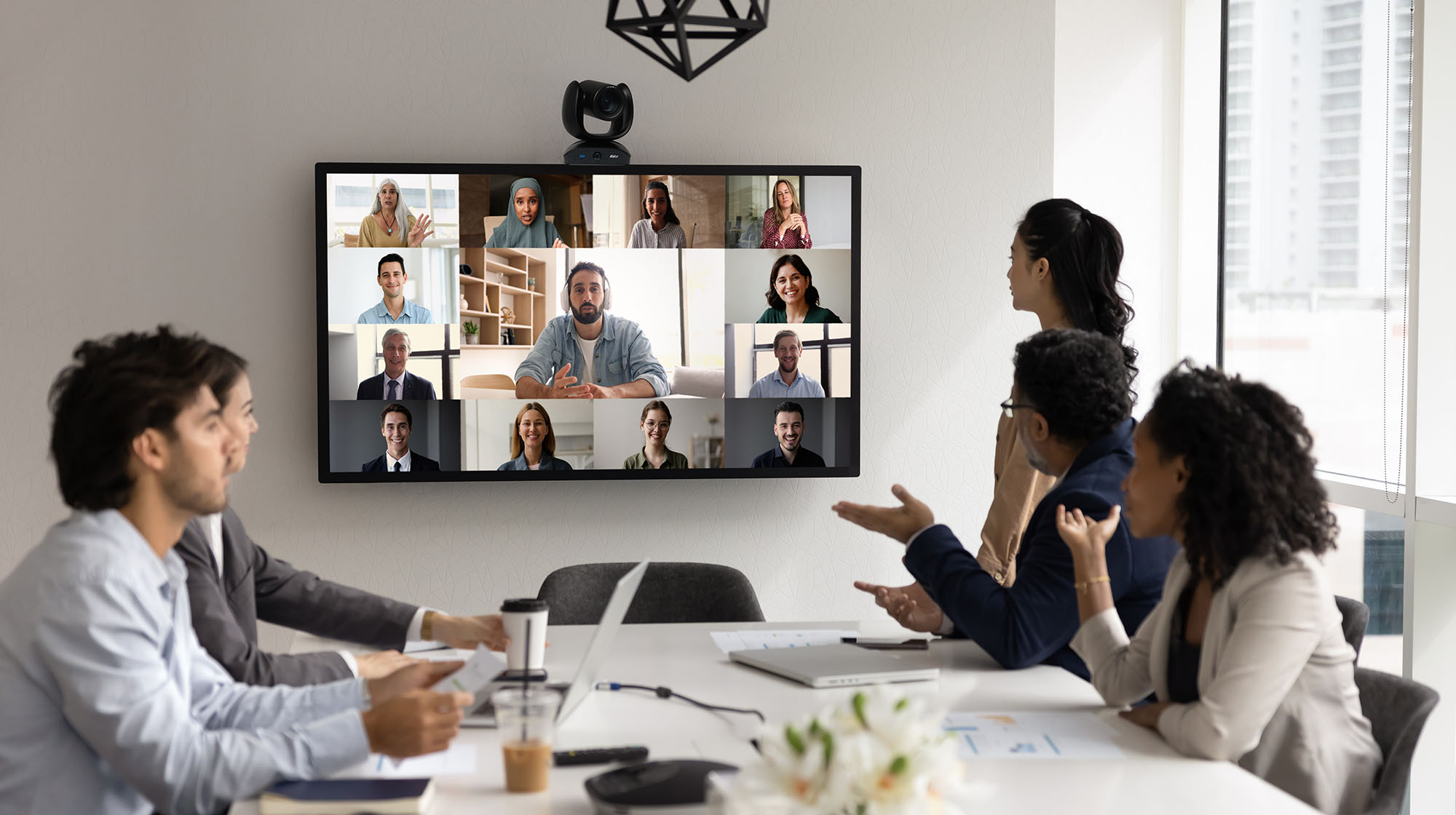
If you look back at the last five years of video conferencing, you’ll remember the difference between a security camera and a Hollywood cinematographer.
For a long time, we treated our meeting rooms like security feeds. We put a static lens at the front of the room, captured a wide, grainy view of a long table, and patted ourselves on the back because remote participants could technically "see" us. It was passive. It was functional. But let’s be honest, it was boring, and it made remote workers feel like spectators rather than participants.
2026 is the year that changes.
As you look at your budget for this year, stop thinking about "coverage" and start thinking about "direction." The shift we are seeing right now is massive: we are moving from Passive Observation (static cameras, standard mics) to Active Participation (AI-directed video, intelligent audio fencing).
We used to just watch the meeting; now the room directs the meeting for us.
If you are planning your upgrades for 2026, here is where your money needs to go, and why this isn't just another tech refresh.
1. The Death of the "Bowling Alley" Shot
We all know the shot: that long, awkward view of a conference table where the CEO looks the same size as the coffee cup in the foreground.
In 2026, the single-camera setup for medium-to-large rooms is officially obsolete. The budget priority now is Multi-Camera Intelligence. We aren't just talking about digital zoom anymore; we are talking about multi-angle switching that mimics a TV production.
The Skeptic asks: "Isn't that distracting?" The reality: It’s the opposite. It reduces cognitive load. Remote participants stop squinting to see body language and start actually listening to the content.
2. Audio That "Sculpts" the Room
For years, we’ve been happy with "noise cancellation." If a dog barked, the software caught it. But 2026 demands more. We are moving toward Audio Fencing and Voice Isolation.
Open offices and glass-walled fishbowls are nightmares for audio. The old fix was expensive acoustic paneling. The new fix is intelligent hardware that creates invisible "curtains" around the participants.
This isn't just about clarity; it's about privacy and professionalism in spaces that were previously unusable for high-stakes calls.
3. The "Invisible" Workflow (BYOD 2.0)
If someone walks into a room in 2026 and have to touch a tablet, fiddle with an HDMI dongle, and then ask, "Can you see my screen?", the room has failed.
The trend is Zero-Touch / One-Cable Intelligence. We are seeing a move toward systems that wake up the moment you walk in and wirelessly pair with your laptop before you even sit down. Or, if you prefer the reliability of a cable, it’s a single USB-C that handles video, audio, touch control, and power.
4. Sustainability is a Feature, Not a Bonus
"Green Tech" sounds like a buzzword. But look at your energy bill. Look at your corporate ESG goals.
Newer AV hardware is smarter about power. We are talking about devices that use AI to understand occupancy. If no one is in the room, the gear doesn't just "sleep", it powers down to near-zero consumption. Conversely, when you book a room, the system warms up 5 minutes before you arrive.
You are probably thinking, "This sounds expensive. Can we really justify 'AI Directors' and 'Audio Fences' when we just need to make video calls?"
Here is the truth: Bad meetings are more expensive than good hardware.
If your team dreads the hybrid meeting because they can't see the whiteboard or hear the speaker, they stop collaborating. They disengage. The "Passive/Old" way of buying gear was checking a box. The "Active/New" way is investing in productivity.
In 2026, don't just build a room that people can sit in. Build a room that works with them.